.svg)
What Is TM30? A Simple Guide for Foreigners Renting in Thailand

TL;DR
TM30 is a Thai immigration form that your landlord must file within 24 hours of you moving in. It records where you are staying in Thailand. While it is your landlord's legal responsibility, not yours. A missing TM30 can cause real headaches when renewing your visa. This guide breaks down everything you need to know in plain English.
1. What Is TM30?
TM30 is an official Thai immigration form whose full name is "Notification from House-Master, Owner, or Possessor of the Residence where a Foreign National has Stayed." That is a mouthful, but the idea is simple: the Thai government wants to know where every foreigner in the country is sleeping at night.
The law itself has actually been around since 1979 under the Thai Immigration Act. It is not new. What changed in recent years is that immigration authorities started enforcing it much more strictly, expanding it beyond hotels to include private condos, apartments, and even houses where a friend might be staying as a guest.
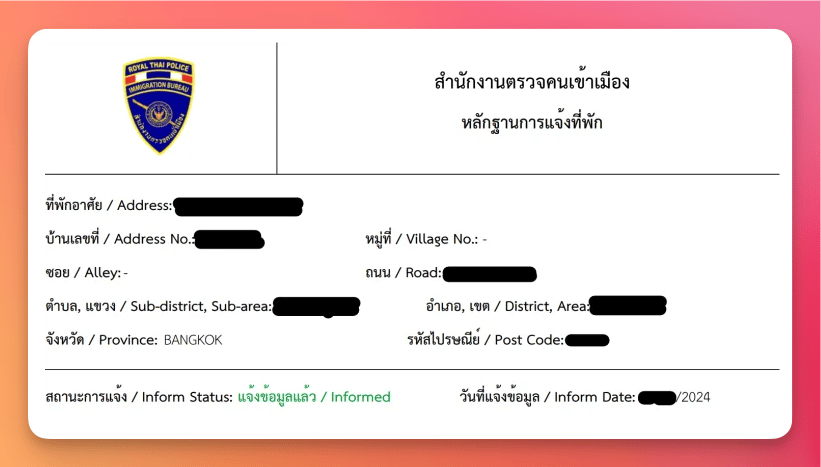
2. Who Is Responsible for Filing TM30?
This is where a lot of people get confused, so let's be crystal clear:
The landlord (or property owner) is legally responsible for filing TM30.
That means your landlord, whether Thai or foreign, must submit the TM30 to Thai immigration within 24 hours of you moving into the property. This applies to:
• Condo owners renting to foreign tenants
• House or apartment landlords with foreign residents
• Thai friends or family hosting a foreign national in their home
• Foreign condo owners who live in their own unit
As a tenant, you are not legally required to file it yourself. However, you should make sure your landlord actually does it, because if they don't, it is your visa and your immigration record that could suffer.
3. What Happens If TM30 Is Not Filed?
Skipping TM30 might seem low-risk. The fine for landlords is only 800 to 2,000 THB per incident. Many landlords simply pay it rather than dealing with the paperwork. But for you as the tenant, the consequences can be more serious.
Visa renewal issues: Thai immigration officers increasingly ask for a TM30 receipt when you extend your visa or do your 90-day report. Without it, your application may be delayed or rejected.
Your immigration record: A missing TM30 can create complications in your long-term residency record in Thailand, especially if you plan to stay long-term or apply for any immigration benefits.
Fine for your landlord: Your landlord faces a fine of 800–2,000 THB. While small, a landlord who repeatedly ignores TM30 may cause ongoing problems for their foreign tenants.
4. What Documents Are Needed?
Your landlord will need to gather a few documents to complete the TM30 filing. As a tenant, you'll want to provide these promptly to make the process smooth:
• Copy of your passport (information page, visa page, and entry stamp)
• Copy of the property's household registration book (Tabien Baan) or title deed
• Copy of the rental agreement
• Copy of the landlord's ID card (for Thai landlords) or passport (for foreign owners)
Note: All documents must be certified in blue ink.
5. How to File TM30 (3 Ways)
There are three ways to submit the TM30 report:
Option 1: Online (Fastest)
The Thai Immigration Bureau launched an updated TM30 online portal in September 2023, available at tm30.immigration.go.th. The site supports both Thai and English, and as of 2024, it no longer requires TM6 or full visa details, making it much simpler than before. After submission, the landlord can download a PDF receipt to share with you.
Option 2: In Person
Your landlord can visit the local immigration office directly. This is the fastest way to get confirmation on the spot. In Bangkok, the main office is at Government Complex on Chaeng Watthana Road.
Option 3: By Post
Documents can be mailed to the immigration office along with a return envelope to receive the stamped confirmation. This method takes 2–4 weeks, so it is only recommended if the other options are not available.
6. What Tenants Should Do
Even though TM30 is your landlord's job, here is what you should do to protect yourself:
• Ask your landlord about TM30 before or right when you sign the lease.
• Provide your passport copies (photo page, visa page, and entry stamp) promptly.
• Ask for a copy or screenshot of the TM30 submission receipt. Keep it somewhere safe.
• Re-confirm TM30 if you leave Thailand and return, since a new filing is needed on every re-entry.
• Make sure your landlord files TM30 every 90 days if required, or at each re-entry.
Pro tip: If your landlord is unresponsive or unfamiliar with TM30, you can politely direct them to the official immigration website at tm30.immigration.go.th. The process now takes just a few minutes online.
7. TM30 and Shared Living. What CoLive Users Should Know
If you are finding a roommate through CoLive, TM30 is something worth discussing openly before you move in together. Here are a few things to keep in mind:
If you are a room seeker moving into someone else's condo: The condo owner (the landlord) is responsible for filing TM30. Before finalising a match on CoLive, confirm that your potential roommate understands and request a TM30 for you from the landlord.
If you and a roommate are searching for a room together: When you find a place, make sure the landlord knows about TM30 from day one.
At CoLive, we believe that transparency between roommates starts before you even move in. Knowing each other's responsibilities, including the legal ones, leads to a much smoother living experience.
8. Final Thoughts
TM30 might sound intimidating at first, but once you understand it, it is really quite straightforward. The key takeaway is this: it is your landlord's legal responsibility, not yours. But it is very much in your interest to make sure it gets done.
Whether you are a student, a young professional, or someone new to Bangkok, staying on top of TM30 will save you from unexpected headaches when renewing your visa or extending your stay. A good landlord or roommate will handle it without you even having to ask. But now you know enough to ask the right questions.
Looking for a compatible roommate in Bangkok who already has a room sorted, or wants to search together? CoLive connects people who are serious about finding the right fit. Check out our listings and find your match today.
FAQs About TM30
Q1: Do I, as a foreign tenant, need to file TM30 myself?
No. The legal responsibility for filing TM30 belongs to your landlord, condo owner, or property manager. However, you should ensure your landlord does file it, because a missing TM30 can affect your visa renewals and immigration record.
Q2: What happens if my landlord refuses to file TM30?
If your landlord refuses, you have a few options: pay the 800 THB penalty yourself and file it with a Power of Attorney document, or switch to a landlord who takes their legal obligations seriously. Some tenants have successfully pushed back by politely explaining the visa implications.
Q3: Do I need a new TM30 every time I leave and re-enter Thailand?
Yes. Each time you return to Thailand from abroad, your landlord must file a new TM30, since your arrival stamp and entry details change with every re-entry. Always remind your landlord after an international trip.
Q4: Is the TM30 online system reliable?
Since the updated portal launched in September 2023, it has been much more user-friendly and supports both Thai and English. As of early 2024, it no longer requires TM6 or full visa details. While the occasional technical glitch has been reported, it is generally the fastest and most convenient option.
Q5: Do I need TM30 if I am staying in a hotel or serviced apartment?
No. Hotels and registered serviced apartments handle TM30 reporting automatically as part of their check-in process. TM30 only becomes something you need to think about when renting a private condo, apartment, or house.